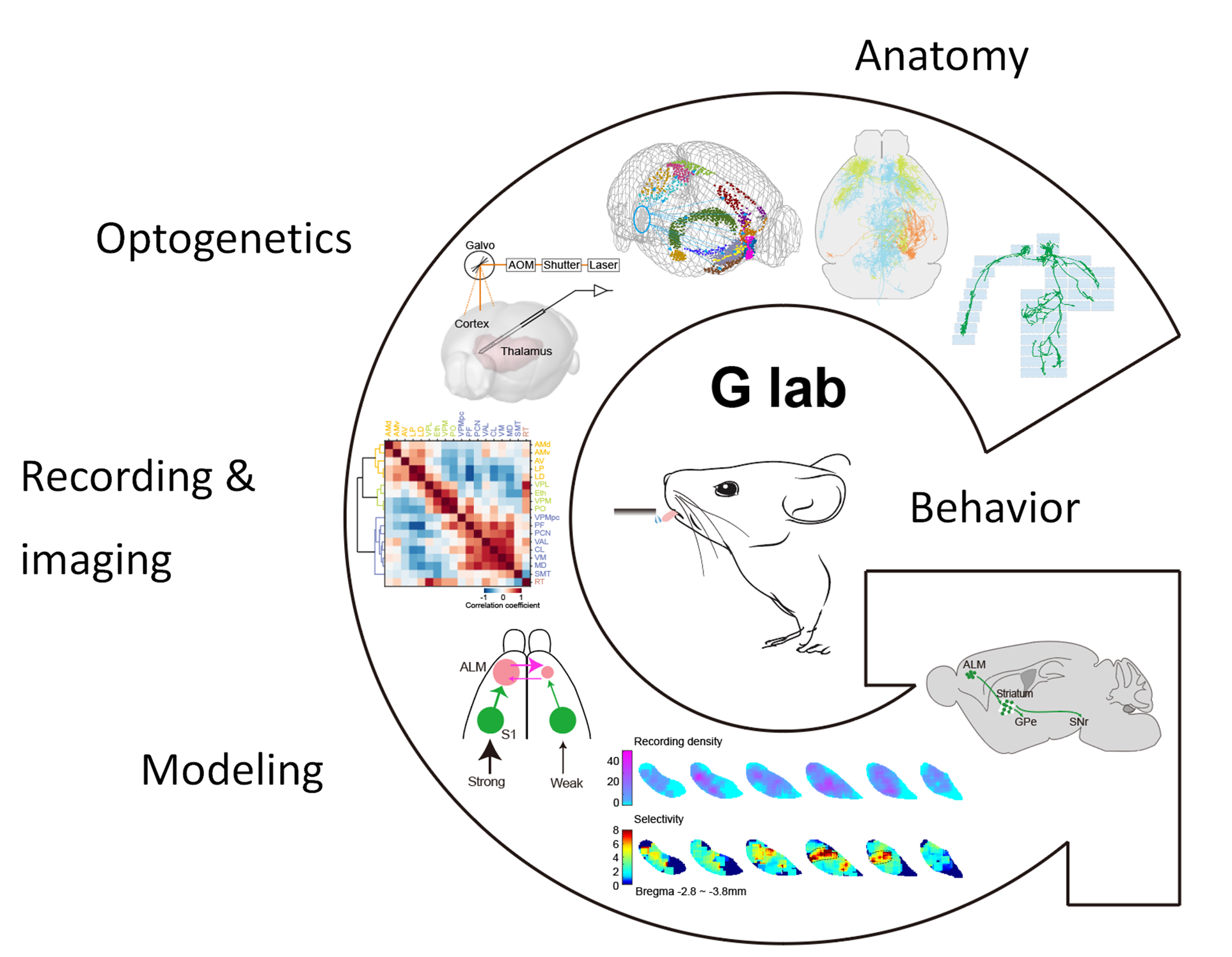
The mammalian brain comprises hundreds of distinct regions, interconnected by intricate neural fibers to form a dynamic network capable of flexibly processing information in real-time based on varying circumstances. External sensory information is temporarily stored as working memory upon entering the brain, guiding subsequent actions. Working memory serves as the foundation for cognitive functions such as learning, reasoning, decision-making, and consciousness. Our lab employs mice as the primary model system, integrating optogenetic manipulation, multi-channel electrophysiology, two-photon imaging, and quantitative behavioral studies to investigate how multi-regional neural networks facilitate the generation and maintenance of working memory, how coordinated changes in multi-regional neural dynamics support the learning of working memory behaviors, and to develop novel structural and functional imaging methods to advance the study of multi-regional neural dynamics. Through the study of brain network functions and the application of new technologies, we aim to ultimately understand the operational mechanisms of working memory networks, provide new insights for the treatment of working memory disorders, and inspire novel network models in artificial intelligence.